Showing posts with label personal growth. Show all posts

Saturday, May 16, 2015

Diabetes Blog Week 2015 Day Six: Favourites and Motivations

If you have been blogging for a while, what is your favorite sentence or blogpost that you have ever written?  Is it diabetes related or just life related?  If you are a new blogger and don't have a favorite yet, tell us what motivated you to start sharing your story by writing a blog?  (Thank you Laddie of Test Guess and Go for suggesting this topic.)
 

Writing is very important to me. It’s a passion of mine. When I was younger, everyone thought I was going to write the Great Canadian Play. That may never happen, but I love getting to “write what I know” on this blog, and in the process, connect with other people in some way. Here are a few favourite moments, for me, in three categories.


 “Popular”


 My second-most read post of all time was one I almost deleted, because I wrote it in a very emotional space, and I was worried it would be controversial. “Liar” is about all the things, people, and institutions that lie to people with diabetes throughout our lives. It sparked a lot of discussion, was shared by many people and organizations, and even made it to a conference slide (which I found out about after it was posted on the Internet; it would have been nice to be informed or asked, thanks).


 So when I hear that test strips can be +/- 20% in accuracy (a 10 could be 12, or 8) and are often worse, it makes me sad. Because it's a lie, and we're already dealing with so much misinformation, so many lies, that we'd like something to be true. Something that, instead, takes the best of us, the life from us–blood is life–and turns it into another lie. Something that comes from the heart, which is supposed to (but often fails to) be the truest thing of all.” "Cards Against Diabetes" is my most popular post because I think it’s a ton of fun, and it touches a nerve. Some people are turning against the game as becoming tiresome, offense for the sake of offense, but I think it works well in the context of diabetes – what’s more offensive than that? It’s nice to share our experiences, and make mocking matchups. One day it would be nice to play with a full deck (that’s how diabetes makes me feel, too).


 Pop-Culture


 I do a lot of pop culture referencing in relation to diabetes (see my Star Trek rant from Thursday). One of my favourite pop-culture posts is my comparison of the diabetes life to the life and mission of Buffy the Vampire Slayer (my favourite show of all time). It’s a constant, valiant, thankless and unpaid fight, and all diabetes has to do is have one good day.


As diabetics, we walk the fine line between secretly believing we're immortal and knowing that we've got this expiration date. In a way, we have more conscious control over what our bodies are doing than anyone else; in another way, we have much less, our bodies being essentially out of control with so many factors to deal with.  Buffy's super strong and quick, but she has to deal with all sorts of violently unpredictable outside forces that most people don't.” 


Another, “Latitude and Longitude,” takes an episode of the West Wing, where Sam has his worldview destroyed, and explores how things you thought were solid, like latitude and longitude, can turn into constantly moving goalposts.

 Now, we place great trust in our devices. We try to believe that they will never fail us. We place our lives in the hands of plastic and metal and batteries and medical research, sure that they will work; sure that they will always deliver some sort of base measure of performance. Like latitude and longitude. We know this isn't true. Plastic fails. Metal fails. Batteries are spent. People get sick. People die. We take a lot on faith. Like latitude and longitude, which are invisible.” 


Finally, my favourite kids’ book, The Phantom Tollbooth, lends itself perfectly to the emotional journey of diabetes.

 D-Blog Week

We all need a little impetus to get writing, and D-Blog Week is so amazing for providing that every year. Some of my favourite D-Blog Week posts, to round out the list:
 Diabetes Hero”: All about the people who mean a lot to me. It was nice to thank everyone, and to hope for the future.


 "Everybody who has touched my diabetic life is my diabetes hero. It's trite but it's true. Everybody with diabetes is my diabetes hero. If you asked someone to say or draw the first thing that comes to mind when you say "hero," it would probably be a fighter of some kind. A war hero; a soldier. A firefighter. And that's what we all are. We fight every day against odds that sometimes seem insurmountable; in a way, they are. The odds are literally insurmountable. We can't win. The best we can do is try, and see another day the best we can. Bravery is not the absence of fear; it's having the courage to fight in spite of that fear. The definition of hero seems to be a person who fights even when he or she knows he or she can't win, because it's right. That's what we do."


 Mantras and More” won a couple of D-blog awards, and I’m so happy it resonated with people.


 Each drop of blood is a drop in the ocean
Each high and low is a wave in the sea
Each day you live represents forward motion
Each day you make it the best it can be. 

"Change The World (Sweat The Small Stuff)” was about the things that seem small, but really mean a lot. The post meant a lot to me.

 The refrain is constantly there. The small stuff is the heartbeat pumping the lifeblood of diabetes: the fear inherent in every move we make. The small stuff is the big stuff. The big stuff is the small stuff. We are made of atoms, and capillaries, and the tiniest prickles on the skin. When we complain about the small stuff, we are saying: we are here. We are saying: we are scared. We are saying: listen.” 


Hope this wasn’t too self-indulgent! It’s fun to walk down memory lane.

Wednesday, March 18, 2015

18 Years.


Today, my diabetes is an adult. On March 18th, 1997, I was diagnosed with diabetes. That makes 60% of my life I’ve lived with this boarder, and I’ve never collected a dime of rent.

I almost feel like a proud parent. I’ve officially shepherded this chronic illness to maturity. It can now vote, though it’s always had a certain amount of say in how I spend my day. As someone who will probably never have actual children, I will have to use this as a proxy sense of accomplishment.

As many parents do, I had no idea what to do with diabetes in its infancy, and I didn’t even know what type it was going to be (who knows, with kids?) I was not very good at discipline and maintaining order at the start, which set it on the wrong track, because we hadn’t learned to have mutual respect for each other. I kept trying to give it time-outs, which never actually worked.  I kept trying to do everything on my own, which rarely works out well. It got older, and brattier, and more rebellious, until it found its true identity. I dealt with the terrible twos to the terrible teens, and there were definitely some serious growing pains. Diabetes began to develop a personality, and I saw myself in it. When it hurt, I hurt. When it was calm, I was happy. When I saw a good number on the report card, I felt a sense of serious pride from my guidance, though I knew there was only so much I could influence and control. I began to develop a grudging respect for it as an individual. It had survived, and so had I.

It’s settled into adulthood rather well, and certainly became more mature. Oh, sure, I still sometimes forget my extra insulin at home when I’m about to spend twelve hours at the office (which I…may have done this month), and no-one said adulthood was easy, or that adults can’t be as ridiculous as children much of the time. The successes, however, are beginning to outnumber the failures:

This year, I kept my A1c in the low 7s. The 6s still elude me, but who wants to peak at 18?

This year, I received my first and second blogging awards from the Diabetes Online Community, and I completely missed the first one until I found out about the second. I won “Best Motivational Post” for my May DBlog Week “Mantras and More” entry from the Best of the ‘Betes Blogs (a monthly event with a changing adjudicator). I had no idea until I found out about the “best posts of the year” roundup and was shocked to see my name among some amazing company. Anyway, tying for the best motivational post of 2014 was absolutely stunning to me. Why? Because when my diabetes was a kid, and when it hit teenagehood, I couldn’t even motivate myself. Now I’m flying.

Then, this year, I did something that lots of people do when they become adults: I married the love of my life. Diabetes was by my side the whole day, like a junior bridesmaid or a particularly annoying ringbearer. Even though I was so nervous I could barely eat before the ceremony, it still
BG check pre-ceremony
gave me a 15.8 with all my jitters. After the insanity of the day, my parents accidentally took my purse with my meter home with them for the night, so I was flying blind at the hotel. But I never went low, I never felt sick, I was normal through dinner and after, and I never crashed, because, let me tell you, the day was one huge high.


Diabetes did not keep me from the most beautiful wedding cake I’d ever seen. It remained on the periphery through the perfect, magical, heartfelt and hilarious ceremony. The Playbills were perfect. The vows were perfect. The pictures were great. The dancing was spectacular. The photobooth was a hit. The food was delicious (and I got to eat it). I threw the flowers off a balcony, and I didn’t hit the chandelier. My pump didn’t get caught in a garter, nor was too bounced around when we were lifted precariously on chairs. Diabetes kept its distance when I danced with my father and hugged my mother, when they walked me most of the way down the aisle. Diabetes came with me the rest of the way: it’s an adult, and so was I, forging ahead. Diabetes listened to my husband promise “in sickness and in health” and mean it and so much more.

I was so worried that it would ruin the best day of my life, but it didn’t, and that’s what it was: the best day, the perfect day, a day I can’t even encapsulate in words and have been scared to try. It didn’t ruin my day. It was just a part of it, because it’s a part of me.

I have been so worried that diabetes would ruin my life, but it hasn’t. It was just a part of my life, because it’s a part of me.

Just like at my wedding, diabetes is always there. But I am surrounded by love, so much love from my astounding, wonderful family (with a “husband’s side” now) and friends. That love didn’t start at the wedding, and it didn’t end after it. Love is a part of my life. Love is a part of me. Love, I have found, is a part of learning to share your life with diabetes.

So, as my diabetes officially becomes a legal adult, I feel nothing but love. It’s an illness, an identity, and a journey. It propels me on a journey of self-discipline, analysis, and growth, which is what all good conditions, the human one included, do. Anything can be traumatic or redemptive, or both, depending on how you view this journey. After all, life is a degenerative disease, if you look at it a certain way. In another light, though, it’s the next step toward evolution.

Monday, August 12, 2013

The Diabetes Phantom Tollbooth

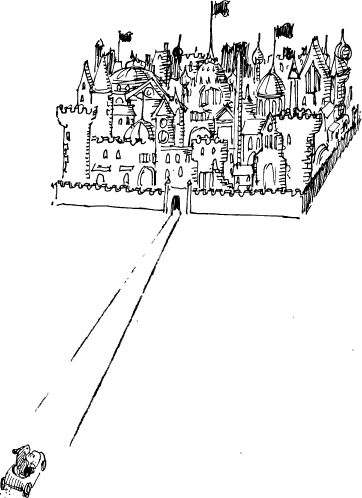
As a child, my favorite book was The Phantom Tollbooth, by Norton Juster, with pictures by Jules Feiffer; much like Anna Quindlen of the New York Times opines, I thought it was "the best book ever." Shockingly, it was one of very few books that I discovered by seeing the movie adaptation first; I accidentally came across it during a visit to Florida, and my parents were deprived of much of an afternoon at the beach as I refused to stop watching. The story features a young boy named Milo, who is always bored, and is never satisfied with wherever he is or whatever he's doing. One day, a box arrives, "for Milo, who has plenty of time," and Milo grudgingly assembles a cardboard tollbooth with some mysterious coins and a child-sized toy car. Once through the tollbooth, he winds up on a quest through a series of magical lands that teach him the value of letters, words, numbers, senses, sights, sounds and the magic that knowledge unlocks. The book is filled with wordplay and puns, and it inspired me to pursue writing (an effect I'm sure it had on many curious children).

To me, the Phantom Tollbooth's many fantastic locations and wonderful puns can be applied just as easily to diabetes as to any other aspect of life. Here's a look through The Diabetes Phantom Tollbooth:

The book opens on you, newly diagnosed with diabetes. In a funk, depressed, you don't want to be where you are. A mystery package shows up, with a note: "TO YOU, WHO MAY THINK YOU NO LONGER HAVE TIME." When the Diabetes Tollbooth arrives, first, you have to put in your coins to get through. When we're talking about a toll, that's definitely a word I associate with diabetes.  Mental, physical and financial, you've got to pay these tolls to get through life.

Driving along the road, you first encounter The Doldrums: Here's where you get stuck early on in the book and in diabetes. It's grey, boring, and sad. No thinking is allowed, and certainly no laughing. You can get dangerously stuck in the Diabetes Doldrums, and it's difficult to get out; the Doldrums want you to stay, and they want to consume you. The Doldrums are a poor representation of life, but they're easy, if you don't care what happens to you. Everyone gets stuck once in a while, but the trick is to get out! Tock, the "watchdog" in the book, represents the wonderful Diabetes Online Community, with a CGM in his belly. Your best friend, he keeps you on track, telling you to think, imagine, and dream. It's hard work, but it moves you forward.

Next, you encounter The Whether Man: The Whether Man in the book knows that it's more important to know whether there will be weather than what the weather will be. He reinforces the need to always be prepared for any circumstance. He also knows there is no "wrong way" ahead; just your way, and my way, or someone else's way. Your diabetes may vary!

You finally come to your first city: Dictionopolis: Here we learn that words mean something, and impact the way we feel about our condition, our lives, and ourselves. Words like "brittle," "the bad kind," "noncompliant" are shown to be powerful negative weapons, that are combatted by words like "hope," "community," "friendship," "meet ups," and "ice cream." Here we also find that you can make it further by listening if you don't have all the info, rather than speaking, for like the Dictionopolis car, it "goes without saying." Often, people will be forced to eat their words, just as they do in Dictionopolis, so it is really important to think before one speaks, and to say something nice and tasty. Half-baked ideas are served for dessert, and just like real desserts, they're tasty and intriguing but dangerous if you eat too many, or take them too seriously. If you give your diabetes Short Shrift, you may be arrested by him (Officer Shrift), but you can be let out of jail if you display a Faintly Macabre sort of humour.

Your job in this world is much like Milo's: you have to find your sense of Harmony. Your sense of self has been split, with this diagnosis; the words you use to describe your world, your life, your self - they don't match what the numbers say. The numbers are out of whack and need constant correction. The words are fighting with the numbers as to which is more important, and have banished the princesses of Rhyme and Reason, who understand that words and numbers must be given equal importance. Nothing can be set right until Rhyme and Reason are returned. Armed with new words, you set out on your quest with Tock, the Humbug (how you sometimes feel) and the BEEtes (a giant bee that spells everything out for you).

Along the way, you meet a boy who grows to meet the ground, and you understand you must grow to meet your own set of challenges. You complain, and complain, but then you meet Dr. Dischord, who wants to cure the world of pleasant sounds so all you hear is noise, and you realize that constant complaining can purge your ears of the wonderful sounds of the world. Chroma the Great, who conducts the sunset, helps you to see the rich colour and texture diabetes can bring to your life, even though you must conduct your own symphony. Sometimes, like Milo, you get too ambitious and your colours go out of whack, or you seem to lose days at a time to this vicious disease, but with help you can get back on the conducting track and it might seem as if nothing had ever happened.

You get to the point where you're starting to take charge of this diabetes thing, when you encounter the Valley of Silence. It's so tempting to stay with the status quo and be quiet about what's "wrong" with you, but you see the injustice for all in remaining quiet about what needs to be done, and letting the message be controlled by a select few media narratives. You break the silence for good with activism, blogs, diabetes walks, petitions, videos. You spread the message of need and success far and wide.
The Dodecahedron

Now that you're interacting with other people and organizations, you suddenly find yourself on The Island of Conclusions. You get to this island by jumping; jumping to conclusions. Here we find many representatives of the media who deal with diabetes, and many other individuals who we deal with on a daily basis. As soon as a reporter assumes an older person has Type 2, or that there is only one type of diabetes, or that a thin person can't have Type 2, they would be off to the island. As soon as someone assumes you ate too much sugar as a child, that you brought it on yourself, could cure yourself with a diet, or that diabetes is easy to deal with and insulin is the same as a cure, they would go right to the island. We would love to actually send these people flying to the Island of Conclusions, where we wouldn't have to deal with them until we jumped to a few conclusions of our own (why isn't my BG coming down? Must be bad insulin. Couldn't be the pasta).

You finally find yourself in Digitopolis, the land of numbers; you try to figure out how all this math works and how it's going to be relevant to you living your life. While you figure out that averages don't tell the whole story and that you can run forever and not reach infinity (or, as we call it, perfection), you find some valuable tricks for your arsenal, guarded by the kindly Mathemagician (who may well have the face of your endo or your CDE).

The Dodecahedron shows you the many faces of diabetes, and you're introduced to Subtraction Stew - or, its real name, insulin. Insulin, like Subtraction Stew, is the only thing that can make you feel hungrier after you've eaten bowl after bowl of food. But, if you don't take it, Subtraction Stew takes on a whole new meaning: nothing you eat is actually absorbed into your system, and you can get thinner and thinner the more you eat; as the Humbug observes, it's like eating bowls of "FAMINE!" Eventually, you learn that, while they don't always add up like you would like them to, just like the words that don't always tell the right story, numbers are absolutely valuable tools that you must use to better live your life. Sometimes, they can even be fun, like when that pencil the Mathemagician uses as a wand pencils in a "no-hitter"!
The Mathemagician and King Azaz of Dictionopolis

The two sides of you have slowly agreed to work together, but you must make the final push; you have all the tools you need, but you and your few friends set out to find Rhyme and Reason alone. The Castle in the Air, that mythical-sounding place of true harmony, awaits. It can't be real; can it?

The scariest and most taxing part of the journey toward Rhyme and Reason is fighting your way through the steep, dark Mountains of Ignorance, which teem with demons of all types.

The Terrible Trivium is at the head of the demon pack. The Terrible Trivium gets in your way, big time. He is a minor demon, who puts you off taking care of yourself. He tells you to fritter away your time on other, meaningless tasks, because "in five years, there will be a cure." You must use your numbers to look at the real situation and pull yourself away from this seduction, reminding yourself that he has no real face.

Other demons chase you and you must fight them: the Demon of Insincerity, a false friend who sounds big and scary, but has no real power; the Overbearing Know-It-All (just listen to me; I know more about you than you know about yourself), the Threadbare Excuse (I was too busy to take care of myself), the Gelatinous Giant (just try to struggle out of these mountainous insurance claims! You must fight him with activism) and the snake-oil salesmen who form the twin Gorgons of Hate and Malice. It's a hard struggle, and it feels like a lifetime, but you make it to the stairs at the base of the castle, where you encounter one last gatekeeper: the Senses Taker.

The Senses Taker, who wants to take all your senses, is a frightening reality. Here is where you truly learn the power of your words, and yourself. You fear the loss of yourself, your identity; more tangibly, you are terrified of the loss of sight, of heart, of feeling in your limbs. But you fight back with love and laughter, because, in the end, nobody can take your vital sense of humour. Past the Senses Taker you go, and up those precarious steps with every fibre of your being and those friends by your side, and you open the door to the Castle in the Air.

And there Rhyme and Reason have been, waiting for you, all along.

You feel whole. Your journey is complete. You're a hero: adulation, banquets and all. Your A1c is the best it's ever been. Your endo wants to throw a ticker-tape parade. But then, you have to say goodbye, and really step out on your own, to a future that could be just as scary as this parable got at its worst.

You wake up. You're suddenly far away from Digitopolis and Dictionopolis. Tock, the Humbug, the BEEtes; they're not always with you. You've come so far and learned so much, and you recognize its worth. But you know there's so much left to be done, and learned, and experienced. Today, like yesterday was, and like tomorrow will be, is the first day of the rest of your diabetic life.

The tollbooth is gone, but you find a note left in its place, and in its own way, it means everything.

It says, "TO YOU, WHO NOW KNOW THE WAY."