Thursday, February 20, 2014

Manners-isms

Miss Manners, yesterday, wrote a column in which she told people with diabetes that they should not test their blood sugar or administer insulin in public, specifically referring to airplanes. Miss Manners requests we wait until an airplane washroom is open, we are allowed to stand up, we can push past the person next to us, avoid the drink cart, and then try to balance a tester in a probably dirty, cramped room with nowhere to rest it. All this is to avoid the person near us having to hear a click and see half a drop of blood going into a test strip. Because that’s rude.  “Medical applications…should be done out of sight,” writes Miss Manners.

Miss Manners thinks diabetes should be seen and not heard; except, wait, it shouldn’t be seen, either.


Hi, Miss Manners.

I used to be like you. I used to think that diabetes was shameful and it would be rude to subject other people to the vagaries and horrors of seeing me either testing my blood sugar in public, or giving myself an injection.

I used to always be “in public.” I used to not test my blood sugar for days, or even weeks. I used to have terrible A1cs that nobody could understand. It’s because of stuff like this. People believing I was inconvenient and rude for trying to take care of myself – and me believing them.

Miss Manners, if you want to take on someone, don’t take on people with diabetes. Take on diabetes itself. I’m not rude. Diabetes is. I have to deal with this rude visitor every day. Here are some “manners” that diabetes doesn’t have.

  • Diabetes doesn’t wait for the right time to interrupt. It can strike like a cellphone ring in the middle of a concert, when you’re driving, or in an important business meeting. It’s more likely to strike when the stakes are high. I worry that diabetes will be the uninvited loud guest at my wedding.
  • Diabetes is gross. It involves bodily fluids and complications, and it reminds us that we have bodies and that they are fallible. All the time. So much of “manners” is pretending we don’t have bodies. Diabetes makes that impossible.
  • Diabetes overstays its welcome. Benjamin Franklin, one of the original advice columnists, has a quotation often attributed to him: “Houseguests, like fish, start to smell after three days.”  I’ve had diabetes for 6183 days; that I know of, anyway. Diabetes has only overstayed its welcome for 6180 days. And it has NEVER brought me a hostess gift, unless you count stuff I don’t want: no wine, no thoughtful chocolates. Diabetes makes me buy my own wine. Oh, and diabetes sometimes doesn’t play nice with alcohol either.
  • Diabetes is greedy. It takes your time, your money – and it never pays it back – and sometimes it demands a ton of sugar or the contents of your fridge.
  • It’s kind and polite to take care of the sick. Diabetes actually demands MORE when we’re sick, like a husband forcing his flu-ridden wife to make him breakfast while cleaning the house. It’s also polite not to afflict others with your illness if you don’t have to. That, however, only counts for contagious diseases. I can’t call in and say “woke up and I still have diabetes! Can’t come in today.”
People with diabetes have to deal with this consistent rudeness, in their own bodies, on their own turf, every single day. It’s honestly a manners victory that we’re not running around screaming “I’m high as hell and I can’t take it anymore!” all day.

We just want to take care of ourselves. Isn’t the kindest, politest thing to do…letting us do that?

Much of the idea behind being good to others is that everyone is fighting a hard battle, so consideration is key. I don’t know if that factors into manners or not, but I certainly hope it does. All I know is, when I started to make my diabetes public rather than hidden, when I stopped hiding away, when “oh, I’ll have to waste ten minutes getting to the washroom to test and the conversation will have moved on without me, “ that one more barrier to testing that made sure I didn’t, stopped: that is when I felt better and vastly improved my health. That was me not “mannering” myself into an early grave. That’s when the education and connection started, not when it was severed.

Perhaps instead of keeping a polite distance from each other, we could be a little unseemly and acknowledge that we’re all in this together.

Especially when we’re crammed together in coach.

-Ilana

Sunday, February 9, 2014

Spare A Rose

The day I knew my fiance was right for me was the day he explained, out of the blue, why he didn't get me flowers.

Now, I know that sounds strange. In your traditional sitcom, the guy who forgets to buy (Valentine's Day, birthday, anniversary, Columbus Day) flowers is always depicted as being, shall we say delicately, SOL (shit out of luck). This hapless gent tries to find something, anything, in the already-closed flower shops or the bottom-of-the-scraped barrel at the grocery store, or the gas station. Anything to prove to his harridan of a significant other that he cares. But when my fiance said, "I didn't buy you flowers," it was actually one of the sweetest things he's ever said, because of what followed.

"I didn't buy you flowers because I know they make you sad. They're pretty, but they die, and it breaks your heart when you have to throw them out," he said. Flowers are pretty, and symbolize life, but they also symbolize its fragility, because, cut, they die quickly. Instead, he gets me delicious things to eat, or takes me to a play, or gives me a book, or finds my favourite show, or even hunts for new and interesting glucose tablets; anything to show that he both cares and knows me as a person. Once, we went to a sushi place that made us intricate flowers out of vegetables; a wonderful subversion of the trope for a special day.
The veggie flowers

Our wedding will have very few flowers. If there are any, most of them will be living, in pots, so that people can take them home and cultivate their life, rather than admire their death.

Don't get me wrong; if you have ever gotten me flowers, I have loved them. I have loved the gift, and your thoughtfulness. And my heart has broken a tiny bit when I've had to finally throw them out; I hate to get rid of anyone's thoughtful gesture, even when it's expired.

I'm telling you this because it's Valentine's Day this week, and because there's a cause I passionately believe in that understands that, in the developing world, the life of a child with diabetes can be as beautiful and short as the life of a cut flower.

Insulin is expensive for me, particularly during a semester without insurance, but I can stock up on it and, in the end, I can afford it. Many people can't. The leading cause of death for children without diabetes in many countries is not hypoglycemia, DKA or diabetes complications: though the latter two are usually involved, the root cause boils down to lack of access to insulin. As another blogger pointed out, if you have to choose between feeding the rest of your children and one vial of insulin, the insulin will not win. Making that choice is brutal, but it is a brutal reality.

Lack of access to insulin is a diabetes complication that we can DO something about. So much of diabetes is random and unpredictable in terms of what happens to you, that it seems crazy not to fix the things we actually can.

To that end, I'm asking you to be my valentine and Spare A Rose. Spare A Rose, Save A Child is a campaign to raise funds for Life For A Child, an International Diabetes Federation organization that brings diabetes-related medical supplies and education to children all over the world. Nobody should die from diabetes, but most of all, nobody should die of diabetes due to a lack of education or supplies.

Spare A Rose asks you to omit one flower from your Valentine's bouquet of 12 roses, and to donate that $5 to provide a month of life to a child with diabetes. Donating $60 (12 roses) will sustain a child for a year.

None of us can choose the numbers on our ticket of birth in the lottery of life. For me, diabetes was a losing number. But I have so much love and care in my life, and because of my family and my opportunities I am comfortable financially. I have won so much. It chills me to the bone, and not just because it's February, to think where I could be right now had I been born in another country and to different circumstances with the same faulty genes. My life, like a rose, could have been cut.

Spare A Rose, Save A Child. I promise you'll be my valentine.


-Ilana

Saturday, December 21, 2013

Happy Birthday/Indiana Lucas and the Insulin Vial of Doom

Wednesday was my 29th birthday; not as momentous as 30, but certainly a time to think about what a good run my twenties have been. I celebrated in style; on the previous Sunday, I had a lovely birthday party at a bar; I had it catered with Cuban food, an awesome friend made a (not-sugar-free) cake, and there was much talking, joking, and playing of Cards Against Humanity (not Cards Against Diabetes, sadly). On my actual birthday, I was in Florida; I'd flown in the night before, and before going to visit my fiance's family, we decided to spend that day at Disney World. I had a wonderful time. We timed everything at the Magic Kingdom so we never had to wait too long for anything, went on all the rides we wanted to, and even saw a bit of performance art with a teenager dressed as the Mad Hatter, pretend-sipping from an oversized teacup while riding in a teacup at the Mad Tea Party.

Relaxing in my fiance's arms as the fireworks display exploded above us, I reflected on the fact that diabetes had practically given me a reprieve all day. It might as well have been called the Magic Blood Sugar Kingdom, because my readings weren't higher than 5.7 all day. I had two minor lows from walking around so much, but they occurred when we were about to eat, anyway. I managed to cram all necessary supplies into a tiny purse, and nothing malfunctioned. Happy birthday to me!

Tonight, the D-gods decided to get me back a bit. I present to you the story of: Indiana Lucas and the Insulin Vial of Doom! (I hope this is not a trilogy.)

A few hours ago, knowing I was going to be away from the house for many hours tomorrow, I pulled an insulin vial out of the package so that I would take an extra (I still have insulin pen vials even though I use a pump...I don't know why). Slipping out of my hands, it fell on the tile of the kitchen, and I winced as I heard the "smack." I picked it up, but was relieved, as it looked totally fine. "Guess it didn't fall from too high," I told myself. "The birthday luck holds." I put it in the removable card/coin pouch in my purse.

I stayed up later than planned, which was probably a good thing, as my pump ran out of insulin, and it would have woken me up to change it out anyway. I went through the coin purse to get the vial, and found a second one, nearly full. "Huh," I thought. "Guess I didn't need to take the second one out after all." Then my fingers found the second vial, which...gave slightly at the touch. This was worrisome. I picked it up, and a small piece fell off the bottom. Not good. Okay, I was going to use this vial instead to fill the cartridge. I put the needle on to the cartridge and, as is my wont, used the needle cover to press on the orange stopper part of the vial to fill the cartridge, as that is generally easier. The cartridge plunger didn't move. Instead, insulin started gushing out of the bottom (though currently the top, as it was upside-down) of the vial. Indiana Lucas had set off the first booby trap in the temple. This was going to be no walk in the park.

I had brought a lot of extra insulin, as I am far from home and will be for two weeks. Seeing insulin start to seep over the sides of the vial and drip, though, made me panic. This is expensive, life-giving liquid. I had to save it. I had to keep the vial upside-down at the same time. What to do? The cartridge couldn't support the weight of the vial and keep level. I kept a hand on it, while searching through the coin purse. I found what I was looking for: the auxiliary syringe I keep just in case something goes wrong (like right now). I picked it up, and with one hand, tried to both hold it and get the cap off, while holding the vial contraption level with my other hand. I was an action hero. I...I...

I sank the needle directly into my thumb.

Everyone else was asleep, or I would have howled in pain. But this was Indiana Lucas time, and Indiana Jones doesn't get hit by the arrows. So, instead, one hand still steadying the broken vial, I eased the syringe out, and it repaid me by scratching across some of the rest of the digit. But I kept my cool.

I then used the syringe to suck up the gushing insulin and insert it into the partially-empty other vial I already had out (good luck!)

The insulin started bubbling through the base of the damaged vial again (bad luck!)

My thumb started dripping blood (worse luck!)

With the vial still upright in my hand, I marched into the kitchen, deftly grabbed a paper towel, and wrapped it around my thumb, partly with my hand, partly with my teeth. I performed the insulin-hoovering manoeuvre again. Then, for more efficiency, I switched to taking insulin out from the "correct" end as quickly as possible. I could not let any of this stuff drip onto the carpet. Switching the two vials as quickly as possible, I felt like Indiana Jones replacing the idol with a weight of equal value. It was going to work! It was going to...
Uh oh.

The other vial was full. The plunger of the other vial was slowly starting to work its way out of the tube. There was nowhere else for the insulin to go. Was I about to lose TWO vials of insulin? The giant ball of rock was released, and was picking up speed behind Indiana Lucas, as she struggled to find a way out. There was too much air in the saviour vial. I could remove it with the syringe. The syringe was full of insulin. Insulin that had nowhere to go. My pump was buzzing like crazy, adding to the chaos, because of course I hadn't had time to put the filled cartridge back into it.

Holding EVERYTHING upright, now, I had a flash of insight. I could keep the rest in a cartridge. I found an old cartridge to be a temporary vessel. I was about to use it when I noticed some odd sediment. No, bad idea. Tossing the old cartridge into the trash, I rushed to my bag and found a new cartridge.  I just needed to transfer the insulin from the syringe into the cartridge, and then I could take the air out of the vial, and then...

Wait, how do I get the insulin from the syringe to the cartridge? Can I push it in through the top? Tried a bit. Didn't look so great. Think, Lucas, think. Okay. Use the cartridge to take insulin out of the vial. Inject the stuff in the syringe into the vial. Take out the air with the now-empty syringe. Plunger equalized. Then, finally, take out the very last dregs of the broken vial, into the cartridge. The puzzle was solved. The puzzle worked.

As I siphoned the last of the insulin out of the broken vial - I don't know if it was the pressure of my hand keeping it upright, or the sudden lack of contents, or what - a large piece suddenly broke off. The vial lost what structural integrity it had. I stared at the crumbling vessel, realizing I had only lost 5, 10 units of insulin, tops, and how much worse it could have been. Indiana Lucas had run just fast enough to dodge the ball of rock, as it tumbled out of sight. Holding her treasure aloft, she nonchalantly stepped into the sunshine, to deal with the jungle as it came.

-Ilana

Wednesday, December 4, 2013

Cards Against Diabetes

Cards Against Humanity is kind of an awesome game. If you've heard of Apples To Apples, it bills itself as "Apples to Apples for horrible people." If not, here is the premise: there are black and white cards. The black cards involve one, two or three blanks to fill in. The white cards are things to fill in the blanks. Play rotates so that everyone playing gets to blind-judge the white-card submissions (minus theirs) in order. The usual trick to CAH is to be as offensive as humanly possible, or at least as clever or possibly unintentionally accurate or poignant as possible, depending on who is selecting the winning card.

As offensive as possible, you say? What's more offensive than having to deal with diabetes?

I propose a game of Cards Against Diabetes (though perhaps Diabetes Against Humanity would be more accurate). It would be awesome. So, so awesome. What better way to deal with this crap than to laugh at it?

I give you: some starter cards for Cards Against Diabetes. Note: this game is supposed to be offensive, so if you are very sensitive, please don't read the cards! You've been warned (although they could be worse, honestly). For everyone who wants to play: please suggest more cards! Does this call for a D-Meetup, or what?  I hope you enjoy! :)

Some black cards, to get you started

Some white cards, to get you playing.   


Sunday, November 24, 2013

Gym Date

Woke up this morning with a 2.9 low blood sugar, low enough that I couldn't feel part of my face. Had a gym date. Most days I'd go back to sleep, exhausted. I was exhausted. I hadn't slept, thinking about my insecurities in preparation for joining the gym; thinking about the lows I'd have to fight, the way I would feel clumsy, the way I probably wouldn't lose the weight I'm desperate to. Last night I stared up through the skylight in my bedroom, up toward one fantastically bright object. A planet, staring back at me; a heavenly body as far away from me as I feel from my own. I could have gone back to bed. But today?

Screw you, body, I'm not going to let you beat me.

Stuffed yogurt-covered cranberries in my face, leveled out a bit and was out the door. Made it to the bizarrely named Body Pump and got through the hour; first time in the class, so of course there's a learning curve and I'm at the bottom of it. Swallowed my pride and did the starter weights. Stuck it out even when I felt I had no idea what I was doing.

Screw you, body, I'm not going to let you beat me.

Then did an hour of "Body Flow," an odd yoga amalgam, but faster. Got progressively more frustrated at the increasing weakness and remaining pain in my still-crippled elbow half made of metal, until I heard an audible pop. Pulled it together and did NOT curse audibly in yoga class. Namaste. Finished the class even after my arm gave way and sent me crashing to the ground with a snap and a twinge. I got back up, trying to meditate through tears. My meditation was a little unorthodox:

Screw you, body, I'm not going to let you beat me. 

Class over. My commitment to the day was done. I could have gone home immediately with my tail between my legs. But I was so frustrated with my crippled self that I felt I needed to keep moving, keep pushing. I decided to run it out. So after two hour-long classes, I ran two miles on the elliptical, one in 8:55, which might very well be a (admittedly still crappy) personal best. I walked out of the gym with my head held high.

My arm still hurts, but...

Screw you, body, because today I beat YOU.

I have to do it again tomorrow.

-Ilana

Monday, August 12, 2013

The Diabetes Phantom Tollbooth

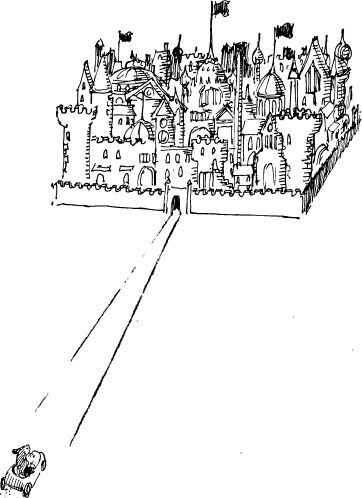
As a child, my favorite book was The Phantom Tollbooth, by Norton Juster, with pictures by Jules Feiffer; much like Anna Quindlen of the New York Times opines, I thought it was "the best book ever." Shockingly, it was one of very few books that I discovered by seeing the movie adaptation first; I accidentally came across it during a visit to Florida, and my parents were deprived of much of an afternoon at the beach as I refused to stop watching. The story features a young boy named Milo, who is always bored, and is never satisfied with wherever he is or whatever he's doing. One day, a box arrives, "for Milo, who has plenty of time," and Milo grudgingly assembles a cardboard tollbooth with some mysterious coins and a child-sized toy car. Once through the tollbooth, he winds up on a quest through a series of magical lands that teach him the value of letters, words, numbers, senses, sights, sounds and the magic that knowledge unlocks. The book is filled with wordplay and puns, and it inspired me to pursue writing (an effect I'm sure it had on many curious children).

To me, the Phantom Tollbooth's many fantastic locations and wonderful puns can be applied just as easily to diabetes as to any other aspect of life. Here's a look through The Diabetes Phantom Tollbooth:

The book opens on you, newly diagnosed with diabetes. In a funk, depressed, you don't want to be where you are. A mystery package shows up, with a note: "TO YOU, WHO MAY THINK YOU NO LONGER HAVE TIME." When the Diabetes Tollbooth arrives, first, you have to put in your coins to get through. When we're talking about a toll, that's definitely a word I associate with diabetes.  Mental, physical and financial, you've got to pay these tolls to get through life.

Driving along the road, you first encounter The Doldrums: Here's where you get stuck early on in the book and in diabetes. It's grey, boring, and sad. No thinking is allowed, and certainly no laughing. You can get dangerously stuck in the Diabetes Doldrums, and it's difficult to get out; the Doldrums want you to stay, and they want to consume you. The Doldrums are a poor representation of life, but they're easy, if you don't care what happens to you. Everyone gets stuck once in a while, but the trick is to get out! Tock, the "watchdog" in the book, represents the wonderful Diabetes Online Community, with a CGM in his belly. Your best friend, he keeps you on track, telling you to think, imagine, and dream. It's hard work, but it moves you forward.

Next, you encounter The Whether Man: The Whether Man in the book knows that it's more important to know whether there will be weather than what the weather will be. He reinforces the need to always be prepared for any circumstance. He also knows there is no "wrong way" ahead; just your way, and my way, or someone else's way. Your diabetes may vary!

You finally come to your first city: Dictionopolis: Here we learn that words mean something, and impact the way we feel about our condition, our lives, and ourselves. Words like "brittle," "the bad kind," "noncompliant" are shown to be powerful negative weapons, that are combatted by words like "hope," "community," "friendship," "meet ups," and "ice cream." Here we also find that you can make it further by listening if you don't have all the info, rather than speaking, for like the Dictionopolis car, it "goes without saying." Often, people will be forced to eat their words, just as they do in Dictionopolis, so it is really important to think before one speaks, and to say something nice and tasty. Half-baked ideas are served for dessert, and just like real desserts, they're tasty and intriguing but dangerous if you eat too many, or take them too seriously. If you give your diabetes Short Shrift, you may be arrested by him (Officer Shrift), but you can be let out of jail if you display a Faintly Macabre sort of humour.

Your job in this world is much like Milo's: you have to find your sense of Harmony. Your sense of self has been split, with this diagnosis; the words you use to describe your world, your life, your self - they don't match what the numbers say. The numbers are out of whack and need constant correction. The words are fighting with the numbers as to which is more important, and have banished the princesses of Rhyme and Reason, who understand that words and numbers must be given equal importance. Nothing can be set right until Rhyme and Reason are returned. Armed with new words, you set out on your quest with Tock, the Humbug (how you sometimes feel) and the BEEtes (a giant bee that spells everything out for you).

Along the way, you meet a boy who grows to meet the ground, and you understand you must grow to meet your own set of challenges. You complain, and complain, but then you meet Dr. Dischord, who wants to cure the world of pleasant sounds so all you hear is noise, and you realize that constant complaining can purge your ears of the wonderful sounds of the world. Chroma the Great, who conducts the sunset, helps you to see the rich colour and texture diabetes can bring to your life, even though you must conduct your own symphony. Sometimes, like Milo, you get too ambitious and your colours go out of whack, or you seem to lose days at a time to this vicious disease, but with help you can get back on the conducting track and it might seem as if nothing had ever happened.

You get to the point where you're starting to take charge of this diabetes thing, when you encounter the Valley of Silence. It's so tempting to stay with the status quo and be quiet about what's "wrong" with you, but you see the injustice for all in remaining quiet about what needs to be done, and letting the message be controlled by a select few media narratives. You break the silence for good with activism, blogs, diabetes walks, petitions, videos. You spread the message of need and success far and wide.
The Dodecahedron

Now that you're interacting with other people and organizations, you suddenly find yourself on The Island of Conclusions. You get to this island by jumping; jumping to conclusions. Here we find many representatives of the media who deal with diabetes, and many other individuals who we deal with on a daily basis. As soon as a reporter assumes an older person has Type 2, or that there is only one type of diabetes, or that a thin person can't have Type 2, they would be off to the island. As soon as someone assumes you ate too much sugar as a child, that you brought it on yourself, could cure yourself with a diet, or that diabetes is easy to deal with and insulin is the same as a cure, they would go right to the island. We would love to actually send these people flying to the Island of Conclusions, where we wouldn't have to deal with them until we jumped to a few conclusions of our own (why isn't my BG coming down? Must be bad insulin. Couldn't be the pasta).

You finally find yourself in Digitopolis, the land of numbers; you try to figure out how all this math works and how it's going to be relevant to you living your life. While you figure out that averages don't tell the whole story and that you can run forever and not reach infinity (or, as we call it, perfection), you find some valuable tricks for your arsenal, guarded by the kindly Mathemagician (who may well have the face of your endo or your CDE).

The Dodecahedron shows you the many faces of diabetes, and you're introduced to Subtraction Stew - or, its real name, insulin. Insulin, like Subtraction Stew, is the only thing that can make you feel hungrier after you've eaten bowl after bowl of food. But, if you don't take it, Subtraction Stew takes on a whole new meaning: nothing you eat is actually absorbed into your system, and you can get thinner and thinner the more you eat; as the Humbug observes, it's like eating bowls of "FAMINE!" Eventually, you learn that, while they don't always add up like you would like them to, just like the words that don't always tell the right story, numbers are absolutely valuable tools that you must use to better live your life. Sometimes, they can even be fun, like when that pencil the Mathemagician uses as a wand pencils in a "no-hitter"!
The Mathemagician and King Azaz of Dictionopolis

The two sides of you have slowly agreed to work together, but you must make the final push; you have all the tools you need, but you and your few friends set out to find Rhyme and Reason alone. The Castle in the Air, that mythical-sounding place of true harmony, awaits. It can't be real; can it?

The scariest and most taxing part of the journey toward Rhyme and Reason is fighting your way through the steep, dark Mountains of Ignorance, which teem with demons of all types.

The Terrible Trivium is at the head of the demon pack. The Terrible Trivium gets in your way, big time. He is a minor demon, who puts you off taking care of yourself. He tells you to fritter away your time on other, meaningless tasks, because "in five years, there will be a cure." You must use your numbers to look at the real situation and pull yourself away from this seduction, reminding yourself that he has no real face.

Other demons chase you and you must fight them: the Demon of Insincerity, a false friend who sounds big and scary, but has no real power; the Overbearing Know-It-All (just listen to me; I know more about you than you know about yourself), the Threadbare Excuse (I was too busy to take care of myself), the Gelatinous Giant (just try to struggle out of these mountainous insurance claims! You must fight him with activism) and the snake-oil salesmen who form the twin Gorgons of Hate and Malice. It's a hard struggle, and it feels like a lifetime, but you make it to the stairs at the base of the castle, where you encounter one last gatekeeper: the Senses Taker.

The Senses Taker, who wants to take all your senses, is a frightening reality. Here is where you truly learn the power of your words, and yourself. You fear the loss of yourself, your identity; more tangibly, you are terrified of the loss of sight, of heart, of feeling in your limbs. But you fight back with love and laughter, because, in the end, nobody can take your vital sense of humour. Past the Senses Taker you go, and up those precarious steps with every fibre of your being and those friends by your side, and you open the door to the Castle in the Air.

And there Rhyme and Reason have been, waiting for you, all along.

You feel whole. Your journey is complete. You're a hero: adulation, banquets and all. Your A1c is the best it's ever been. Your endo wants to throw a ticker-tape parade. But then, you have to say goodbye, and really step out on your own, to a future that could be just as scary as this parable got at its worst.

You wake up. You're suddenly far away from Digitopolis and Dictionopolis. Tock, the Humbug, the BEEtes; they're not always with you. You've come so far and learned so much, and you recognize its worth. But you know there's so much left to be done, and learned, and experienced. Today, like yesterday was, and like tomorrow will be, is the first day of the rest of your diabetic life.

The tollbooth is gone, but you find a note left in its place, and in its own way, it means everything.

It says, "TO YOU, WHO NOW KNOW THE WAY."

Friday, August 2, 2013

Thanks! (and Mr. Sandman)

Before I actually post anything, I'd like to thank everyone for the amazingly positive response that my last post, Liar, has received. Stephen at Happy-Medium.Net wrote a post for D-Blog Check day that stressed the importance of writing, even if your words only touch one person (even if that person is yourself). This is a philosophy I wholeheartedly subscribe to, and I have been delighted every time I make a connection with even one person on my own little personal blog. Sometimes, though, it's even better to connect with over a thousand people! I have no idea what it's actually like to "go viral" (of course, writing about a chronic illness, I'd hate for it to actually "go viral"), but it's been a lot of fun to read all the comments, see my stats counter go berserk, and really, truly feel part of an enormous community for the past week.

Of course, this means that I'm paralyzed with fear about what to post next, now that people are actually looking at me!  I was going to post something about my current steps in healing from injury and moving forward with exercise, but I think I'll do that next time; last post was so serious that I think I'm going to go a bit lighter.

Music is a big part of my life, as well as theatre. I'm in a nerd-rock handbell group called Pavlov's Dogs, and a serious semiprofessional choir, the Amadeus Choir (you can listen to our performance of Bach's B-Minor Mass, recorded by the CBC (Canada's national public radio and TV broadcaster, here - I'm next to the pulpit in the photo, with a music stand because of my broken elbow at the time). Recently, though, I've also started singing with a five-woman a cappella group (no name yet), and it's been a lot of fun. The other day, we were practicing a version of the old standby, Mr. Sandman (original version, by The Chordettes, here). A couple members of our group do burlesque, so I wound up writing a burlesque version of the song on the way home (what else could Mr. Sandman bring?) that I won't post here. After I finished it, though, I thought: if Mr. Sandman could bring us dreams, a guy, and various other things, why couldn't he diversify, and, like a medical Santa Claus, bring me a new pancreas? This is all a long preamble to present my diabetes version of Mr. Sandman, performed by 1950s singing group the Diabeats:


Mr. Sandman, (bring me a) pancreas please
Let me deal with carbs with devilish ease
Remove this blight that tries to erase us
And keep me constantly in homeostasis
Sandman, I’m so alone
Can’t process sugar just on my own
You know test strips don’t grow on trees
Mr. Sandman, pancreas please

Mr. Sandman, pancreas please
The pump is nice, but control’s still a tease
You know I just want to stay alive
I’m sick of glucose tabs and Error Five
Sandman, give me a rest
This regimen's got me feeling oppressed
When I wake I want perfect A1cs
Mr. Sandman, pancreas please!

Mr. Sandman, pancreas please!
I'm like an engine, without any keys
When I am cured, I won’t be a boaster
I’ll just cheer when I step off that glucoaster
Sandman, a dream’s what you make
But nighttime lows kind of keep me awake
If you want me to catch some “Zs”...
Laugh at insurance companies...
Have time for more fun, less disease...
Mr. Sandman, pancreas please!
(And make sure it works this time!)

So, finally, happy Blue Friday, everyone! Here's my special Blue Friday dress:
Stylish *and* awareness-raising!

-Ilana